









































by Jonodev Chaudhuri
Much rightfully has and is being said about the threat posed by unregulated prediction markets to Indian gaming. A well-respected operator colleague recently framed this attempt by companies like Kalshi to bypass regulatory framework as an attempt to “Uber” the industry, and I agree.
Tribes have joined arms with states and the commercial gaming industry to point out that both direct congressional action and sound public policy require that the existing regulatory framework both inside and outside of Indian Country be respected; a framework that through years of fine-tuning litigation and compromise correctly balances the interests of various sovereign authorities and protects the public through robust responsible gaming standards.
Prediction market companies argue that this well-established framework can be set aside simply by calling an event contract a “swap” rather than a wager.
While much has been published on this topic, I want to share a few words on the critical role tribal regulators can play in tribal (and state) efforts to uphold the regulatory framework of gaming (both IGRA and non-IGRA gaming).
With the Ninth Circuit’s decisions on August 28 and September 16, the Third and Ninth Circuits have now issued conflicting decisions. In KalshiEX LLC v. Flaherty, 172 F.4th 220 (3d Cir. 2026), decided April 6, 2026, a divided Third Circuit affirmed a preliminary injunction preventing New Jersey from enforcing its gambling laws against Kalshi. By contrast, on August 28, 2026, the Ninth Circuit unanimously held in KalshiEX, LLC v. Assad, No. 25-7516, that Kalshi had failed to establish that the Commodities Exchange Act (CEA) preempts Nevada’s regulation of its sports-event contracts. And on September 16, in Blue Lake Rancheria v. Kalshi, Inc., No. 25-7504, the Ninth Circuit reversed the district court’s decision, concluding that Kalshi’s offering of sports event contracts on tribal lands likely violates IGRA. These three decisions have created a circuit split that will assuredly result in the Supreme Court opining on whether the CEA preempts state (and tribal) regulation of Kalshi’s sports-events contracts, which in my humble opinion, are nothing more than a wager on a sporting event, or what the gaming industry understands to be “sports betting.” As Judge Roth wrote in his Third Circuit dissent: “Basic abductive reasoning tells us that if it looks like gambling, talks like gambling, and calls itself gambling, it’s gambling.”
In terms of the timing of Supreme Court review, it is hard to say precisely when that will occur. New Jersey filed its petition for certiorari on September 2, 2026, only five days after the Ninth Circuit decided Assad. One company has asked the Court not to weigh in until further CFTC action. Ultimately, there are a number of other federal district and appellate courts currently considering the same legal question and those decisions could provide additional vehicles for Supreme Court review.
At this point, TGRA action would strengthen the arguments made in tribal amicus briefs that tribes have the authority to regulate the wagers Kalshi offers on its platform. Another benefit of TGRA action now is that it would require courts to apply the weight of Congress’s Indian policy to the decision of whether these event contracts are gambling. Congress intended for IGRA to have broad applicability. If these contracts are gambling in the Indian Country context, then they must be regulated as such outside of Indian Country. In this regard, TGRA action would help tribes’ efforts to secure regulation of these products off Indian lands as well as on them.
Although any regulatory action taken by a tribal gaming commission will likely not wind up being the case that is decided by the Supreme Court, any tribal regulatory action would be incredibly helpful to Indian Country’s collective efforts before the Court. If the Supreme Court were to decide the legality of prediction markets today, tribes would only be able to tell the Court that tribes could regulate prediction markets, but that we have chosen not to. Since states are actively regulating, some Justices on the Court may ask why tribes are arguing they can but are not.
The fact that Kalshi may respond with legal action does not mean tribes should not exercise their inherent sovereign right to regulate gaming on their own lands. Instead, it means we must work together, collectively as Indian Country, to ensure the tribes with resources support the tribes without sufficient resources – or perhaps the tribes with resources move first. Regardless, this is a time for Indian Country to act, and we should put our heads together on how to make it happen.
Finally, I respect the inherent sovereignty of all tribal nations to make their own decisions. It was recently announced that one tribe has entered the early stages of partnership with the prediction market industry. This in no way changes the role that tribal regulators may play in regulating what are, in my view, clearly gaming activities. If anything, this development makes their voices more important now than ever.
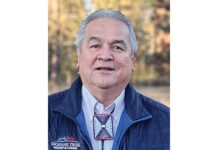
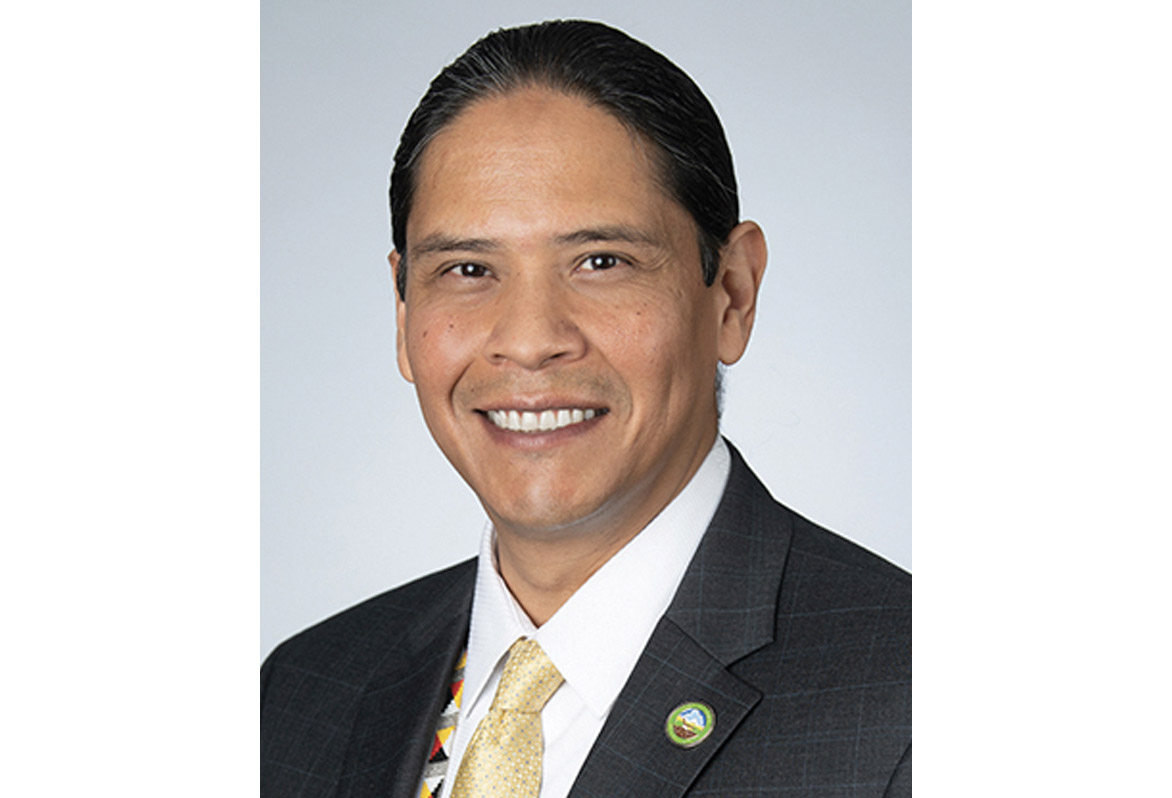
Jonodev Chaudhuri is Principal at Chaudhuri Law and Ambassador of the Muscogee (Creek) Nation. Chaudhuri served as Chairman of the National Indian Gaming Commission from 2013-2019. He can be reached by calling (480) 216-9483 or email [email protected].