




































WASHINGTON, D.C. – As tribal leaders gathered across the country for some of the most significant Native policy, gaming, and sovereignty discussions of the year, the Indian Gaming Association (IGA) had a presence at every major forum to advance one of Indian Country’s most pressing priorities: protecting tribal sovereignty and preserving the integrity of the Indian Gaming Regulatory Act (IGRA).
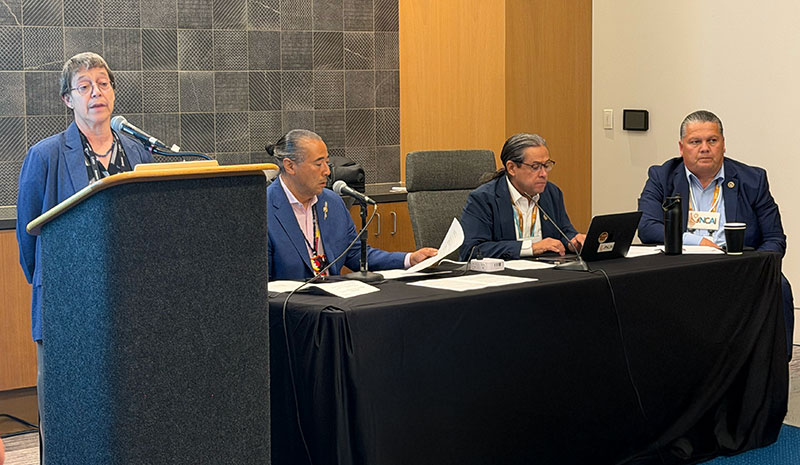
Over the same week, IGA leadership participated in multiple national and regional events, including the 2026 Sovereignty Symposium XXXVIII in Oklahoma City; the Northwest Indian Gaming Conference & Expo in Shelton, WA; and the National Congress of American Indians (NCAI) Mid-Year Convention in Memphis, TN. Together, these events brought hundreds of tribal leaders, policymakers, regulators, and advocates together to address challenges facing tribal nations.
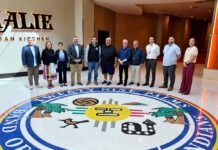
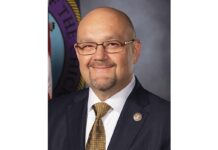
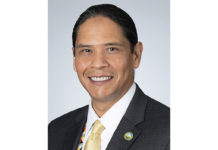
Representing the Indian Gaming Association at the Sovereignty Symposium, Executive Director Jason Giles joined legal scholars, tribal leaders, and policymakers for discussions on tribal sovereignty, self-determination, and emerging federal issues affecting Indian Country. Meanwhile, IGA Chairman David Bean participated in the Northwest Indian Gaming Conference & Expo, and IGA Vice Chairman Tehassi Hill and Secretary Christie Modlin represented the Association at NCAI meetings and Tribal Gaming Committee discussions. The full IGA leadership team concluded the week by joining forces at NCAI to reinforce a unified national strategy on sovereignty and gaming issues.
A central focus of these discussions was the growing concern surrounding federally regulated prediction markets and provisions within the Digital Asset Market CLARITY Act that could undermine tribal gaming rights and sovereignty. Tribal leaders across the country continue to raise alarms that sports-event contracts and prediction markets operating outside the framework established by IGRA could create a parallel wagering system that bypasses tribal authority, tribal-state compacts, and long-standing regulatory structures developed by tribal governments.
“Indian Country is united on this issue,” said Chairman Bean. “Whether we were in Oklahoma, Washington, or Tennessee, the message was the same: tribal sovereignty is not negotiable. Tribal gaming was established to strengthen tribal governments, support self-determination, and provide essential services to our citizens. Any effort to circumvent tribal regulatory authority threatens the very foundation of what tribal nations have built over the last four decades.”
“While Indian Country is united, we must continue to impress upon all tribes, gaming and non-gaming alike, that we cannot rest,” Bean continued. “Every tribal nation has a stake in this fight. Protecting tribal sovereignty is not only a gaming issue; it is also a tribal government and a tribal rights issue. We all have a responsibility to be part of this effort to ensure that the rights our ancestors fought to preserve remain protected for future generations. Sovereignty is only as strong as our willingness to defend it together.”
The Indian Gaming Association has maintained that sports-event contracts offered through federally regulated exchanges are functionally indistinguishable from sports wagering and should not be permitted to operate outside the tribal gaming regulatory framework established by Congress through IGRA. Tribal leaders have warned that unchecked expansion of these markets could divert critical revenues away from tribal governments and the essential services those revenues support, including healthcare, public safety, housing, education, infrastructure, elder services, and cultural preservation programs.
“Gaming revenue is not simply business income for tribal nations,” Chairman Bean continued. “It funds governmental services, creates economic opportunity, and strengthens communities. When federal policy creates pathways that bypass tribal gaming laws and tribal-state compacts, it directly impacts tribal citizens and weakens the government-to-government relationship that has long been recognized by Congress.”
IGA leadership also highlighted growing support among tribal organizations nationwide for amendments to the CLARITY Act that would expressly prohibit sports-event contracts functioning as sports wagering and include protections ensuring the legislation does not preempt tribal gaming laws or tribal sovereignty. Tribal organizations have warned that, without these protections, the legislation could represent one of the most significant threats to tribal governmental authority and gaming exclusivity in a generation.
“The Indian Gaming Association will continue working with tribal governments, Congress, federal agencies, and our partners across Indian Country to ensure that tribal voices are heard and respected,” said Bean. “Innovation should never come at the expense of tribal sovereignty. We will continue advocating for meaningful tribal consultation, protection of IGRA, and preservation of the rights that tribal nations have fought generations to secure.”
The Indian Gaming Association is continuing to work on a national strategy focused on tribal sovereignty, the regulatory framework for tribal gaming, and the economic interests of tribal nations as discussions continue in Washington, D.C.