








































by David Z. Bean
From our founding, the Indian Gaming Association’s mission has committed our organization to protecting tribal sovereignty, defending the rights of tribal governments to regulate and benefit from gaming on our lands.
Today, we face arguably the most dangerous threats to our mission since Congress enacted the Indian Gaming Regulatory Act (IGRA) in 1987. While the most visible threat to sovereignty comes in the form of prediction markets, we also continue
to face challenges to the very foundation of sovereignty – the treatment of Indian tribes as governments.
Over the past year, IGA has made clear that prediction markets pose an existential threat to tribal sovereignty and economies. They offer illegal online gambling that siphons Indian gaming revenues dedicated to tribal education programs for our children, housing for our elders, public safety, and aid to our neighbors.
Prediction markets also directly attack the sovereignty of all 575 federally recognized Indian tribes by forcing their online gambling onto every Indian reservation in the nation. Kalshi and other prediction market platforms are engaging in an online invasion of Indian Country that violates tribal government laws.
Through IGRA, Congress made clear that Indian tribes have the exclusive jurisdiction to regulate gaming on Indian lands. More than 200 tribes have followed IGRA, enacting tribal gaming laws, ordinance, and regulations, all of which define the limits of gaming on Indian lands.
The Commodity Futures Trading Commission (CFTC) is cheerleading this invasion by fostering sports betting through prediction markets. This is a complete reversal of the agency’s legal position. Just 18 months ago, the CFTC viewed the Commodity Exchange Act and its own regulations as clearly prohibiting sports betting.
Not only is the CFTC supporting these attacks on tribal sovereignty, but they are also endangering Native youth in the process. Kalshi and other prediction markets are targeting kids under 21 through their marketing strategy. They advertise on TikTok and hire social media influencers. As a result, today, every teenager with a smart phone can lose their shirt without leaving their home or dorm room. We are only starting to see the devastating impact on our kids’ mental health and their finances.
No one voted for this. Congress didn’t pass a law. This is happening because one person at the CFTC declared that online sports betting is now legal in every state and on every Indian reservation in the country. This is dangerous federal overreach, and IGA and our coalition are urging Congress to act to put a stop to these attacks on our sovereignty and our children.
The second and equally dangerous attack on tribal sovereignty comes in the form of baseless legal arguments claiming that programs designed to meet the federal government’s treaty and trust obligations to Indian tribes are unconstitutionally based on race.
We saw similar attacks in the Brackeen and Maverick Gaming cases. Thankfully, Indian Country won those court battles that sought to undo the Indian Child Welfare Act and the Indian Gaming Regulatory Act.
Sadly, these baseless attacks are being revived by federal agencies. In January of 2025, agencies began to cull federal programs as they sought to implement executive orders targeting programs deemed “diversity, equity, and inclusion,” or DEI.
Several key agencies, including Interior, HHS, and HUD issued guidance memos, clarifying that federal programs serving Indian tribes are based on nation-to-nation sovereignty rather than diversity or race. These memos recognize that tribal government status is a political, legal classification protected by treaty obligations.
However, on December 2, 2025, the Department of Justice’s Office of Legal Counsel (OLC) published a slip opinion titled “Constitutionality of Race-Based Department of Education Programs.” The opinion seeks to water down and narrow the Supreme Court’s 1974 Morton v. Mancari decision and United States’ ability to deliver on its trust and treaty obligations.
The OLC opinion claims that programs benefiting tribes employ a suspect racial classification unless they focus their benefits on Native people affiliated with a federally recognized tribe and they involve a “uniquely Indian interest.” In OLC’s view, programs that meet both requirements will be “exceedingly narrow.”
While the OLC opinion was drafted to apply to Department of Education programs, it is not a stretch to see it used to undermine the legality of hundreds of other federal programs. This line of thinking will be used to attack programs designed to protect tribal government culture and religion (NAGPRA), Indian water rights and legislative settlements, Indian lands (the IRA), Indian healthcare and education, Indian housing, and much more. The baselessness of the OLC opinion cannot be understated.
Upon its formation, the United States acknowledged the sovereign authority of Indian tribes, entering hundreds of treaties to establish trade agreements, form alliances, and preserve the peace. Through these treaties, tribes ceded hundreds of millions of acres of homelands to help build this nation. In return, the government promised to provide for the education, health, public safety, and general welfare of Indian people.
The Constitution itself provides that “Congress shall have power to … regulate commerce with foreign nations, and among the several states, and with the Indian tribes.” By its very text, it establishes the framework for the federal government-to-government relationship with tribes.
Despite this clear legal underpinning, the OLC opinion seeks to undo more than a half century of precedent stemming from the Mancari opinion in the hope that courts make federal Indian policy from the bench.
Programs designed to benefit Indian tribes have nothing to do with DEI and everything to do with the federal treaty and trust obligations to Native nations and the health and safety of our citizens. These legally dubious attacks on tribal sovereignty must be rejected, just as they were by the courts in Brackeen and Maverick.
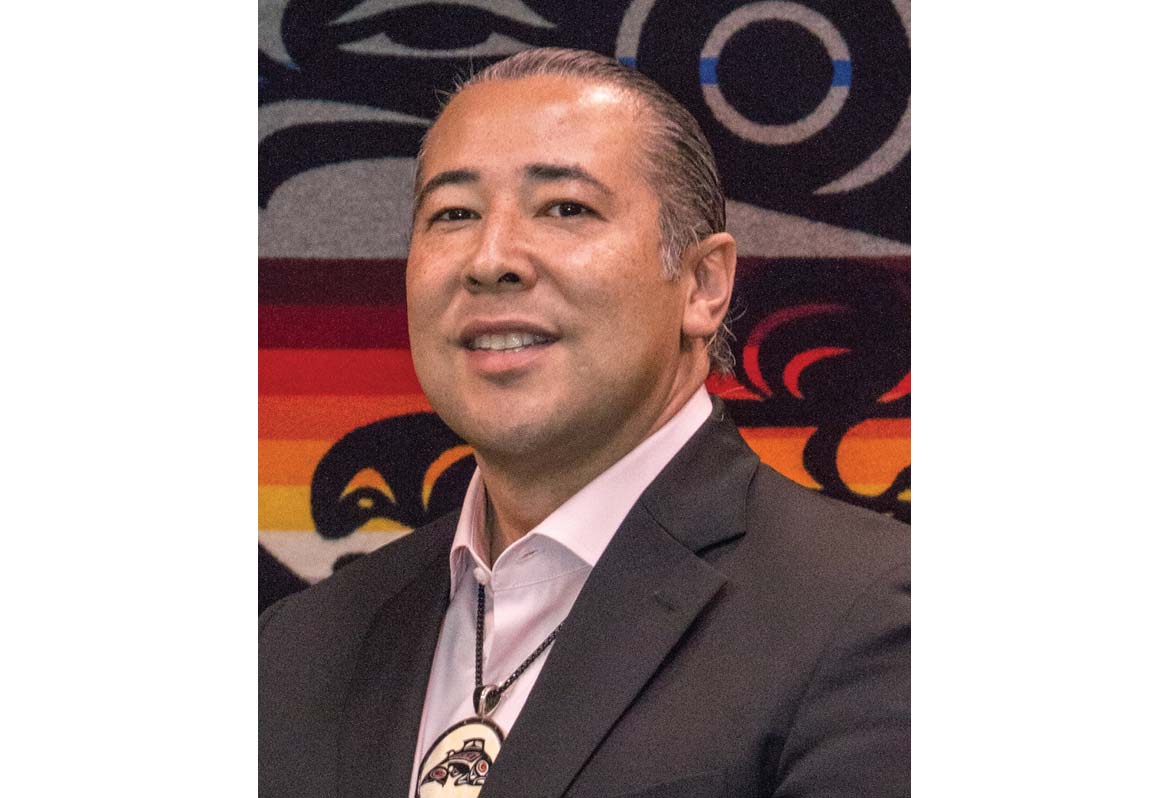
David Z. Bean is Chairman of the Indian Gaming Association. He can be reached by calling (202) 546-7711 or visit www.indiangaming.org.