






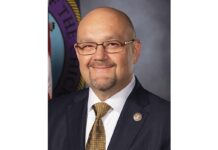







































by David Vialpando
The current casino gaming and entertainment environment requires multi-talented, sophisticated gaming regulators. The industry has responded with a wide variety of training venues and knowledge sharing opportunities. Now may be the time to professionalize the gaming regulatory discipline with defined academic credentials to prepare future generations of regulators to meet the complex challenges that lie ahead.
In the 1970s, the educational requirement for a law enforcement career was usually a high school diploma or a GED. In the 1980s, emphasis was placed on transitioning law enforcement from blue-collar labor to a white-collar profession. This gave rise to undergraduate and graduate college degrees in criminal justice, proficiency standards, and skill certification. This development, with science, technology, and cutting-edge public safety strategies, is arguably the reason for the record low crime rates many communities experience today.
Casino gaming regulation is on the cusp of transitioning into a profession requiring academic degrees and certification necessary to meet the highly technical dynamics and complexitities woven throughout the current gaming landscape. Integrated gaming systems, compound testing standards, detailed player tracking, digitally programmed marketing and promotions, interactive gaming, remote systems, cashless wagering, cloud-based data storage, virtual machines (VMs), and artificial intelligence seemingly touching every aspect of the casino gaming environment requires a regulatory skill sophistication never encountered in the casino gaming industry.
The quest for knowledge by gaming regulators is robust. The plethora of gaming association conferences, training symposiums, online webinars, networking forums, publication articles, and informational bulletins is a testament to the industry’s yearning for cutting-edge strategies and industry best practices. An educational curriculum that has undergone the rigor of academic evaluation not only meets adult learning standards but provides college credit which enhances the professional standing and earning potential of the individual regulator.
A 36-unit, 12-course college-level curriculum suitable for academic analysis and culminating in the conferral of a Certificate in Tribal Casino Gaming Regulation has been developed. The curriculum covers all aspects of gaming regulation, from the components of the Indian Gaming Regulatory Act (IGRA) to the structure and operation of tribal gaming regulatory agencies, including licensing and suitability determination, compliance and investigations, internal controls and audits, casino surveillance, information technology, and emerging issues. While certainly appropriate for gaming commission management and supervisory personnel, curriculum of this type is primarily intended for the journeyman-level practitioner – the licensing agent, compliance inspector, gaming investigator, internal auditor, and surveillance operator.
The developed curriculum meets the certification standards outlined by the Higher Learning Commission (HLC), WASC Senior College and University Commission (WSCUC), Southern Association of Colleges and Schools Commission on Colleges (SACSCOC), and Middle States Commission on Higher Education (MSCHE). The course also qualifies for continuing education credits under the International Association for Continuing Education and Training (IACET – CEUs). With the addition of approximately 15 additional education units in business, law, history, and culture, the foundation is established for an undergraduate degree in Business Management or Business Administration with an emphasis in Casino Gaming Regulation. Coursework delivery of this curriculum can be done virtually, in person in a classroom setting, or in a hybrid format involving both virtual and in-person learning.
With over 500 casinos operated by 250 tribal governments across 29 states and employing 265,000 to 300,000 people, the number of individuals interested in formal education in casino gaming regulation is undoubtedly significant. The agreements many tribes have established with institutions of higher education across the country means that cost-effective baccalaureate-level studies should be accessible for many tribal citizens at lowered cost, and discounts may even be available to non-tribal casino and gaming commission employees. Others interested in academic certification and potential college degrees in gaming regulation include the hundreds of state gaming agency regulators across the country and federal regulators from the National Indian Gaming Commission (NIGC). Several universities and colleges are considering the adoption of the proposed curriculum.
Recognition of casino gaming regulation as a profession establishes a standard commensurate with other complex regulatory professions and prepares the current and future generations of gaming regulators and casino management personnel to meet the multi-faceted and intricate challenges of tomorrow. Acquiring advanced knowledge in an educational setting enables professional gaming regulators to ensure the integrity of gaming and ancillary systems and protect the casino and all who work in and enjoy this amazing industry.
David Vialpando, MBA is Executive Director of the Pala Gaming Commission, Vice-Chairman of the Tribal Gaming Protection Network and author of the book, Fundamentals of Tribal Casino Gaming Regulation – A Primer for Regulators. He can be reached by calling (760) 201-7088 or email [email protected].