










































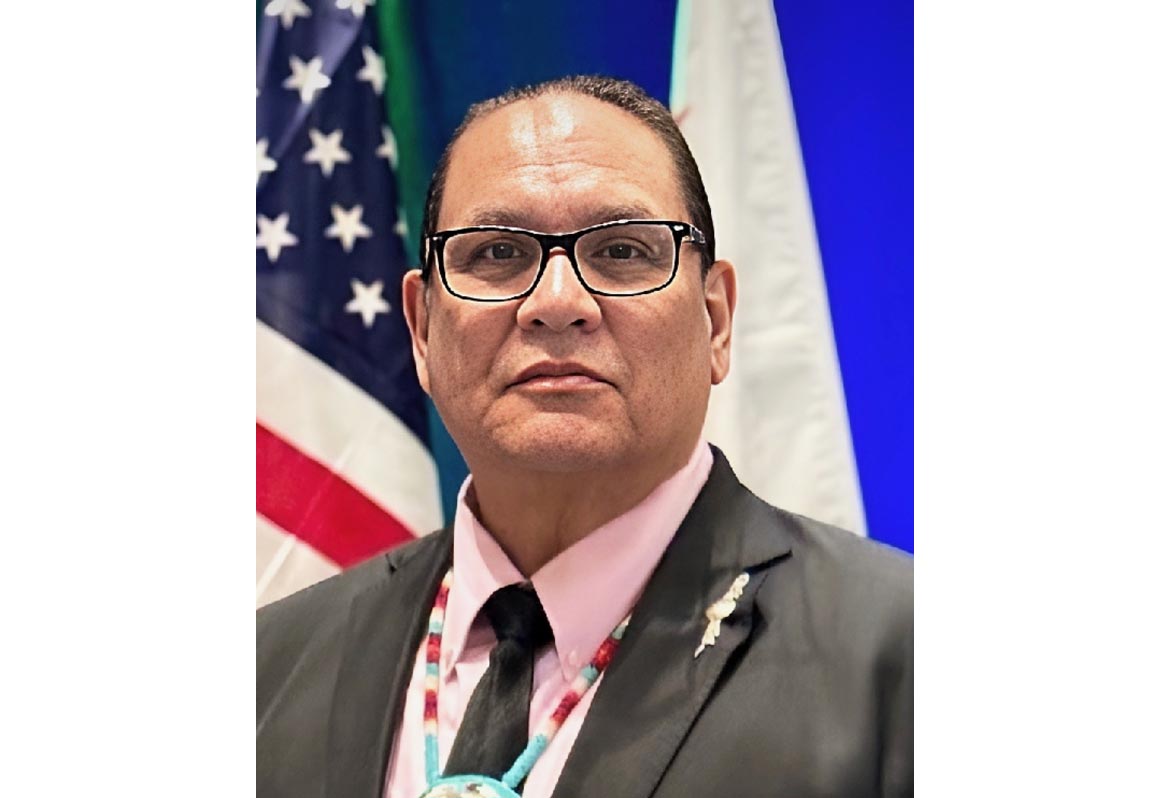
by Ernest L. Stevens, Jr.
As we head into this crucial month of September, tribes nationwide are gathering for the Indian Gaming Association’s Midyear Conference at the Shakopee Mdewakanton Sioux Community’s Mystic Lake Casino Hotel. Then, in mid-September, IGA will join NCAI and the Coalition for Tribal Sovereignty in Washington, D.C. Challenges to Indian gaming and proposed deep cuts to tribal programs will be the focus of these meetings.
Indian gaming has faced several threats in the more than two decades since the Supreme Court reaffirmed our sovereignty in the Cabazon case in 1987. Because our industry is a proven success as the most effective tool for economic development in Indian Country, the threats continue to reappear every few years. An important key to this success is the comprehensive regulatory system that tribal leaders have developed. This multi-jurisdictional system includes tribes as primary regulators, employing more than 6,500 regulatory employees who focus on licensing, audits, surveillance, law enforcement, cybersecurity and much more. Tribes also coordinate with state governments for purposes of Class III gaming. And finally, tribes work with a host of federal agencies, including the NIGC, the FBI, the Treasury Department, the Financial Crimes Enforcement Network, and the Interior Department. In 2024 alone, tribal governments invested more than $450 million on Indian gaming regulation.
However, in 2025, a new challenge has emerged that threatens IGRA and the careful balance that tribal and state governments have struck in regulating and operating gaming. Several online gaming platforms are reframing sports gambling as “event contracts” that they claim are authorized and solely subject to the limited oversight of the Commodities Futures Trading Commission (CFTC) and the Commodity Exchange Act (CEA).
Sports betting only recently returned to legality in the U.S. In May of 2018, the Supreme Court issued its Murphy v. NCAA decision, which ruled that PASPA, the federal law that prohibited sports gambling since 1992, violated the anti-commandeering doctrine of the 10th Amendment of the U.S. Constitution.
In the seven years since the Murphy decision, sports betting has expanded gradually on a tribe-by-tribe and state-by-state basis – working with major sports leagues to preserve game integrity, sharing data to detect suspicious betting patterns, setting rules and regulations to protect athletes and the sports themselves, and advancing responsible gaming initiatives.
Tribes offer sports betting as part of their Class III gaming operations, through compacts that have been carefully negotiated with state governments pursuant to IGRA. These compacts often include revenue sharing provisions, under which tribes share a portion of their revenue with a state in return for exclusivity agreements, which limit the expansion of gaming within the state. Tribes delivered more than $2 billion in revenue sharing payments to states in 2024, and billions more in indirect income, sales and other taxes paid by tribal employees and customers. In 2024, states collected an additional $3 billion in taxes from sports betting through commercial gaming operations.
IGA weighed in early this year in opposition to the use of event contracts as legal forms of sports betting. These bets are being offered nationwide, in direct violation of state and tribal laws and IGRA. The CFTC policy is permitting sports betting to be offered by entities not eligible to conduct gaming on Indian lands. The contracts also violate dozens of tribal-state gaming compacts by expanding gaming within states where tribes have exclusivity agreements that closely limit the expansion of any form of gaming. IGA submitted comments to the CFTC, urging the agency to put a stop to sports betting as a permitted prediction market, met with key lawmakers responsible for overseeing the CFTC, and we shared consistent alerts to our member tribes.
Unlike the comprehensive regulatory frameworks that govern sports betting within tribal and state jurisdictions, the new online gaming platforms can self-certify their betting contracts and begin offering them online immediately with the blessing the CFTC.
The current CFTC Acting Commissioner has no interest in placing a check on these illegal offerings. This inaction is enabling even more platforms to flood the CFTC marketplace. Last month, just weeks before the opening of the NFL and NCAA football season, these platforms expanded their sports betting offerings through the CFTC to include proposition bets and over/under bets on sports contests.
Brian Quintenz, the nominee to serve as Chair of the CFTC, is a strong proponent of online sports betting through the agency. He claims that the CEA is vague on the question of whether gambling is or is not in the public interest. In the past, Quintenz was even more direct, claiming that the public interest determination included in the CEA is an “unconstitutional statutory delegation.”
This issue is winding its way through several federal courts with mixed results. However, the Quintenz nomination, which was delayed in July, will be a focus of Indian Country’s meetings in September. It should be noted that Mr. Quintenz was on the Board of Directors for Kalshi. Donald Trump Jr. announced on X following the 2024 election that he would join the Kalshi team as a strategic advisor, citing the betting lines that leaned toward President Donald Trump on the platform.
Indian Country is also closely following the fiscal year (FY) 2026 appropriations process. After releasing a “skinny budget” proposal in early May, the Trump Administration provided additional details to its FY’26 budget on June 1, 2025. The President’s budget proposes nearly $2 billion in cuts from programs that seek to meet the federal government’s most basic treaty and trust obligations to Indian Country, including slashing the BIA budget by $700 million, $370 million in cuts to the Bureau of Indian Education, and $477 million in cuts to the Indian Housing Block Grant program.
In late July, Congress sent a strong signal that it will continue to respect tribal sovereignty and the government’s obligations to Native communities. Both the House and Senate Appropriations Committees voted to approve their chamber’s versions of the FY’26 Interior Appropriations bill, generally rejecting the proposed cuts to tribal programs, and instead providing slight increases.
Despite this initial good news, many expect a contentious debate over the final budget numbers for FY’26 as the October 1, 2025, deadline approaches.
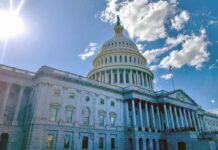
To ensure that the U.S. upholds its treaty and trust obligations and to protect the Indian gaming industry, we are confident that Indian Country will have a strong presence in the nation’s Capital this month and we hope that you are able to join us.
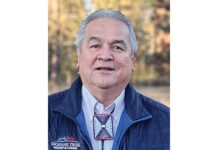
Ernest L. Stevens, Jr. is Chairman of the Indian Gaming Association. He can be reached by calling (202) 546-7711 or visit www.indiangaming.org.