







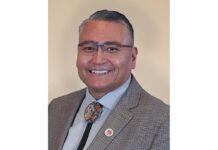

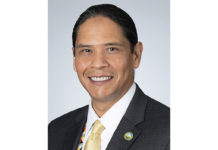

























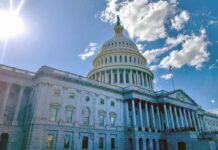





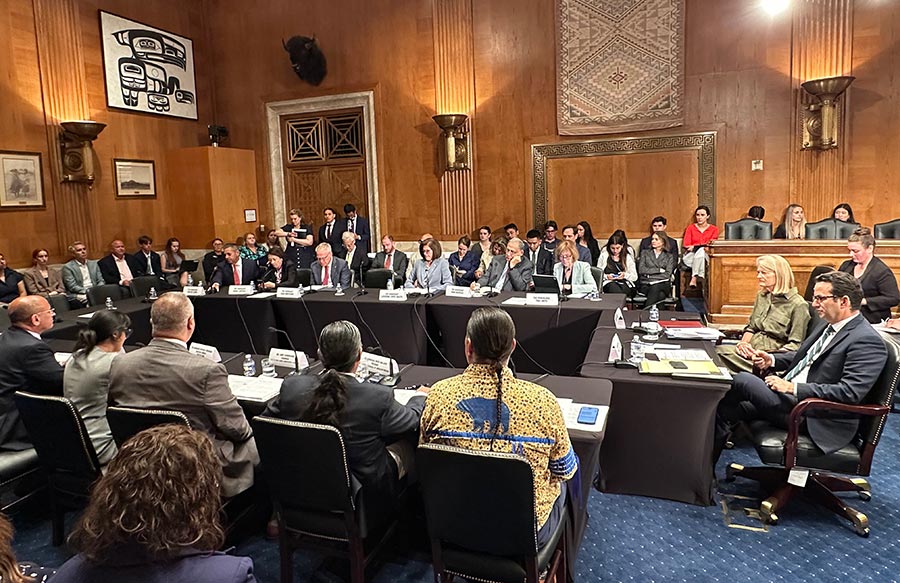
WASHINGTON, D.C. – Indian Gaming Association (IGA) Vice Chairman Tehassi Hill testified before the U.S. Senate Committee on Indian Affairs at a roundtable titled “Tracking Prediction Markets’ Exponential Growth: Tribal Implications and Beyond.”
Committee Chairman Sen. Lisa Murkowski (R-AK) and Vice Chairman Sen. Brian Schatz (D-HI) hosted the bipartisan roundtable, which examined the expansion of prediction markets and their implications for tribal governments, tribal gaming, state regulatory authority, and consumer protection.
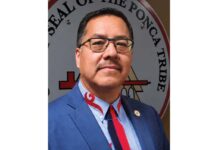
Hill joined a panel that included Mark Macarro, President of the National Congress of American Indians; Jamie Hummingbird, Chairman of the National Tribal Gaming Commissioners & Regulators; Mathura Sridharan, Solicitor General for the State of Ohio; and Dr. Harry Levant, Director of Gambling Policy for the Public Health Advocacy Institute.
The panel presented a unified message that prediction markets offering sports and casino-style wagering are operating outside long-established tribal and state gaming regulatory frameworks while threatening tribal governmental revenues, consumer protections, and tribal sovereignty.
“Indian Country supports responsible innovation and legitimate financial markets,” said IGA Vice Chairman Tehassi Hill, Chairman of the Oneida Nation. “We oppose the use of prediction markets to offer sports and casino-style gambling outside the regulatory framework established by Congress under the Indian Gaming Regulatory Act. Tribal gaming is not simply an industry. It is the economic foundation that enables tribal governments to provide healthcare, education, housing, public safety, infrastructure, and other essential services for our citizens.”
Hill explained that tribal governments have spent more than four decades working with Congress, states, and federal regulators to build one of the nation’s most comprehensive gaming regulatory systems. Today, tribal governments invest more than $450 million annually in gaming regulation and employ more than 6,000 gaming regulators dedicated to protecting the integrity of tribal gaming, enforcing responsible gaming practices, and safeguarding consumers.
During the discussion, committee members questioned witnesses about the growing economic impacts of prediction markets on tribal gaming. Vice Chairman Hill acknowledged that the Indian Gaming Association is working with tribal governments to compile national data on the effects of prediction markets on tribal sportsbooks while noting that proprietary gaming data must be voluntarily shared by tribal operators. He highlighted ongoing collaborative research efforts among Wisconsin tribes as an example of the industry’s commitment to developing reliable impact data.
Hill also urged Congress to take immediate legislative action by advancing the Prediction Markets Are Gambling Act (S. 4160), ensuring the CLARITY Act preserves the full authority of the Indian Gaming Regulatory Act and tribal-state gaming compacts, and preventing the Commodity Futures Trading Commission from expanding sports and casino-style gambling through prediction markets.
Throughout the roundtable, witnesses reinforced complementary perspectives on the issue.
Macarro emphasized that Congress never intended the Commodity Exchange Act to supersede the Indian Gaming Regulatory Act and warned against allowing a federal regulatory workaround to erode tribal sovereignty without consultation.
Hummingbird highlighted the extensive regulatory safeguards tribal gaming commissions provide through licensing, auditing, responsible gaming, consumer protection, and tribal-state compact enforcement, arguing that prediction markets create a federal loophole that bypasses nearly four decades of successful tribal regulation.
Solicitor General Mathura Sridharan described the issue from the perspective of state governments, explaining that gambling regulation has historically belonged to the states because of their responsibility to protect public health, safety, and consumers, and cautioned that financial market regulation is not designed to address those concerns.
Dr. Harry Levant brought a public health perspective, sharing his personal experience overcoming gambling addiction while warning that prediction markets increase access to gambling for young adults and vulnerable individuals without the consumer protections that accompany regulated gaming.
“Vice Chairman Hill represented the Indian Gaming Association and tribal governments with clarity, strength, and purpose,” said Indian Gaming Association Chairman David Z. Bean. “Today’s discussion demonstrated that tribal leaders, tribal regulators, state governments, and public health experts are united in recognizing the risks posed by prediction markets operating outside established gaming law. I am proud of the collaborative work being led by the Indian Gaming Association, together with our tribal partners and allied organizations, to protect tribal sovereignty, preserve the integrity of the Indian Gaming Regulatory Act, and defend the governmental revenues that support tribal communities across Indian Country.”