











































John L. Lowery, Chairman of the Lumbee Tribe of North Carolina, announced that Lumbee Tribal Holdings, the tribe’s for-profit economic development arm, has acquired 241 acres in Robeson County and transferred the land to the tribe for long-term strategic use. The acquisition is intended to support future economic development that can benefit Lumbee citizens for generations.
“This strategic acquisition was made to secure land that can be utilized for long-term economic development initiatives that benefit our people for generations to come,” Lowery said.
The newly acquired property, along with existing tribal assets including the Lumbee Tribe Cultural Center and the Tribal Administration Building, is expected to be placed into trust with the U.S. government at an appropriate time. The land-into-trust process transfers title to the federal government to be held on behalf of the tribe, providing important legal protections and removing the application of eminent domain.
“The land-into-trust process is one of the most important tools available to our Tribal Nations since we became federally recognized,” Lowery said. “We will move forward with these actions when the time is right and in the best interest of our people.”
Chairman Lowery emphasized that economic development will be a central priority as the Lumbee Tribe builds on its recent federal recognition. Across Indian Country, tribes are diversifying their economies to strengthen sovereignty, generate self-determined revenue, and expand services for their citizens.
“As we protect our newly achieved federal recognition and lay a strong foundation for the next 20, 50, and 100 years, economic development must become a top priority,” Lowery said.
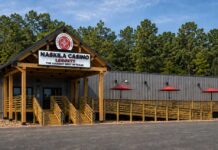
Future development of the 241-acre site will be guided by the will of the Lumbee people. If tribal citizens ultimately vote in favor of gaming, the property could serve as the site of a casino and resort, potentially complemented by a shopping outlet and amenities such as a golf course, a Topgolf-style facility, or a water park. If gaming is rejected, the land could instead be developed as a business and industrial park designed to attract major employers.
“Either of these options can lead to thousands of jobs and be an economic boom not just for our tribal territory but for this entire region of the state,” Lowery said.
Chairman Lowery noted that placing the land into trust would create powerful incentives for corporate investment under existing laws and policies, while ensuring that development aligns with the Tribe’s long-term interests and sovereignty.
As he approaches the final phase of his term, Lowery said he remains focused on positioning the Lumbee Tribe as a regional economic leader, drawing on examples of successful tribal economic development across the country.
“I have seen the economic powerhouse that the Eastern Band has become in the western part of the state, and the transformative growth of the Catawba in the Metrolina region over the last few years,” he said. “I will work with the Tribal Council to position us to be the economic engine for this region and to help make this area more prosperous, safer, healthier, and better educated.”
Chairman Lowery concluded by reaffirming the tribe’s long-term vision.
“Our vision is growth,” he said. “Our vision is to protect our sovereignty. Our vision is to seize these opportunities and take deliberate strategic steps forward, one day at a time, to advance the Lumbee Tribe for many generations yet to come.”